

As AI-generated search becomes more common, many businesses are trying to understand what signals AI systems use when deciding which websites to reference. Unlike traditional search engines that primarily rank pages in a list of results, AI systems often generate answers by analyzing multiple sources and combining information into a single response.
In technical and industrial industries, these systems do not rely only on blogs or general informational websites. Instead, they analyze a much broader ecosystem that includes company websites, supplier directories, technical publications, engineering resources, and industry databases.
When a user asks about manufacturing processes, fabrication services, industrial technologies, or engineering solutions, AI systems attempt to identify sources that demonstrate real technical knowledge and industry credibility.
Below are some of the most important signals AI systems analyze when evaluating technical and industrial companies.
1. Clear Technical Capabilities on the Company Website
The first place AI systems analyze information is the company’s own website. However, many industrial websites provide only brief marketing descriptions rather than detailed explanations of capabilities.
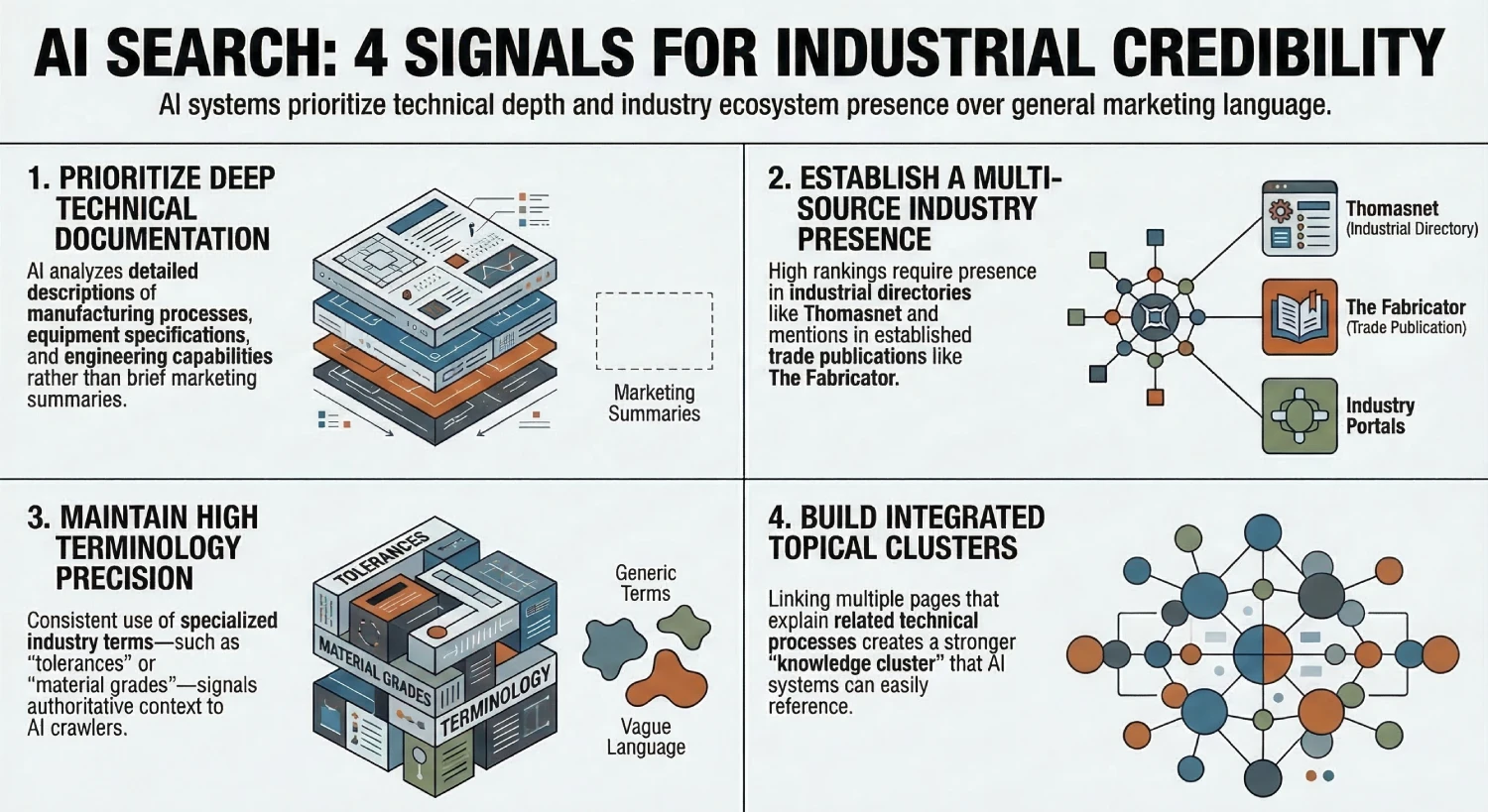
Websites that clearly describe manufacturing processes, equipment, materials, and engineering expertise provide stronger signals that the company has real technical capabilities.
For example, a metal fabrication company that explains processes such as laser cutting, CNC machining, welding methods, and finishing techniques provides useful technical knowledge. AI systems can use this information when answering questions about fabrication processes or industrial manufacturing.
Pages that describe equipment, production methods, and real applications make it easier for machines to interpret what the company actually does.
2. Presence in Industrial Supplier Directories
Industrial supplier directories are one of the most common places where AI systems identify manufacturing and engineering companies.
Platforms such as:
- Thomasnet
- GlobalSpec
- IndustryNet
- Engineering360
- Alibaba Industrial Listings
contain structured information about thousands of manufacturers and suppliers.
These directories typically include company descriptions, product categories, certifications, and capabilities. Because the information is standardized and categorized, it is easier for AI systems to interpret.
When multiple industrial directories list the same company within the same category, it reinforces the signal that the company operates within that industry.
3. Mentions in Industry Publications
AI systems often analyze content from established industry publications when generating answers about technical topics.
Examples of well-known industrial publications include:
- Manufacturing.net
- Modern Machine Shop
- The Fabricator
- Engineering.com
- Automation World
These publications frequently cover manufacturing technologies, equipment developments, engineering practices, and industry trends.
If a company or its technology is referenced within these publications, it provides a strong credibility signal. AI systems often treat these publications as reliable sources when explaining industrial topics.
4. Technical Documentation and Engineering Resources
Another important signal comes from technical documentation published by manufacturers and engineering companies.
Datasheets, application guides, installation manuals, and engineering specifications contain highly detailed information about products and technologies.
When this information is available in structured web pages rather than only in downloadable documents, it becomes much easier for AI systems to analyze.
For example, companies that publish technical specifications, operating ranges, material data, and engineering guidelines provide structured knowledge that can be referenced when AI systems answer technical questions.
5. Industry Associations and Certifications
AI systems also analyze signals related to professional organizations and industry certifications.
Examples include:
- ISO certifications
- ASME standards
- ASTM standards
- industry trade associations
- professional engineering organizations
When companies display recognized certifications or memberships, it signals that the business operates within established industry standards.
These signals help AI systems determine whether a company participates in legitimate industrial supply chains.
6. Consistent Industry Terminology
Technical industries rely on specialized terminology to describe processes, materials, and equipment.
AI systems analyze whether a website consistently uses the correct terminology associated with its field.
For example, a machining company that references:
- tolerances
- CNC milling
- surface finishes
- material grades
- precision machining
demonstrates a clearer technical context than a site that only uses general marketing language.
This consistency helps AI systems connect the website with specific technical topics.
7. Multiple Pages Covering Related Processes
Another strong signal is the presence of multiple pages explaining related processes and services.
Industrial companies that publish pages covering different aspects of their capabilities create stronger topical coverage.
For example, a fabrication company might have separate pages explaining:
- laser cutting
- CNC machining
- sheet metal fabrication
- welding processes
- metal finishing
When these pages link together and explain related topics, they form a cluster of knowledge that helps AI systems understand the company’s expertise.
8. Real Project Examples and Case Studies
AI systems also analyze whether websites provide real-world examples of projects or applications.
Case studies, project galleries, and application examples demonstrate how technologies are used in practice.
For example, a company that shows how its fabricated components were used in construction projects, manufacturing equipment, or architectural structures provides context that helps AI systems interpret the company’s capabilities.
These examples connect abstract services with real industrial applications.
9. Structured Product and Service Information
Industrial websites often provide product catalogues or service listings. When this information is structured clearly, it becomes easier for machines to interpret.
Pages that define product specifications, service categories, materials, and technical attributes provide stronger signals.
For example, a page that lists:
- material types
- dimensions
- tolerance ranges
- production capacity
- industry applications
helps AI systems extract useful data when answering technical questions.
10. Recognition Across Multiple Industry Sources
Finally, AI systems often evaluate how frequently a company appears across multiple independent sources.
When a company appears on supplier directories, industry publications, association websites, and technical resources, it reinforces the signal that the organization is active within the industry.
This network of references helps AI systems confirm that the company is part of a recognized industrial ecosystem.
Why These Signals Matter for Businesses
Understanding these signals helps businesses see how AI systems evaluate technical companies and why many organizations invest in AI search optimization to improve how their expertise is recognized online.
The common pattern among industrial companies that appear frequently in AI-generated answers is that they share several characteristics:
- they clearly describe their technical capabilities
- they appear in industrial directories
- they are referenced by industry publications
- they publish technical explanations
- they maintain consistent industry terminology
These qualities make it easier for AI systems to understand what the company does and when it should be referenced.
Conclusion
AI-powered search systems evaluate technical and industrial companies using signals that extend beyond traditional website rankings.
These signals include technical content on company websites, presence in industrial directories, mentions in industry publications, structured product information, and recognition across the broader engineering ecosystem.
Businesses that clearly explain their capabilities and contribute useful knowledge about their technologies are far more likely to be recognized as credible sources.
As AI-generated search continues to evolve, companies that build strong technical information resources will have the greatest chance of appearing in the answers that engineers, buyers, and industry professionals increasingly rely on.